

8TH ANNUAL IBAU CONFERENCE 2026
Trust Reimagined: Delivering on the Promise
EXECUTIVE SUMMARY
The 8th IBAU Conference, held from April 22nd to 24th, 2026 in Mbarara, Uganda, convened over 350 industry leaders, regulators, and ecosystem partners to confront a persistent challenge: the trust deficit. Under the theme "Trust Reimagined: Delivering on the Promise," the conference moved beyond diagnosis to prescription. Key proceedings emphasized that trust is built not through marketing, but through fair and prompt claims settlement, transparent policy terms, and professional client advocacy. Sector performance data showed broker premiums reached UGX 567.58 billion (28.03% of total industry premiums), while claims paid approached UGX 950 billion an improved ratio of nearly 50%. Despite this progress, speakers called for urgent action to raise Uganda's insurance penetration from 0.86% of GDP, still trailing Kenya (2.4%) and Tanzania (2.1%). The conference championed a shift from transactional to transformational insurance, prioritizing MSMEs, informal workers, and households through installment-based microinsurance, shared technology platforms, and deep broker-insurer-regulator collaboration. Regional unity through EAIBA and a clear opening call for purposeful action set the stage. Six cross-cutting themes emerged, including trust as operational discipline, inclusivity as economic necessity, and claims settlement as the ultimate test. The resounding conclusion: trust reimagined is a daily discipline of delivering on the promise.
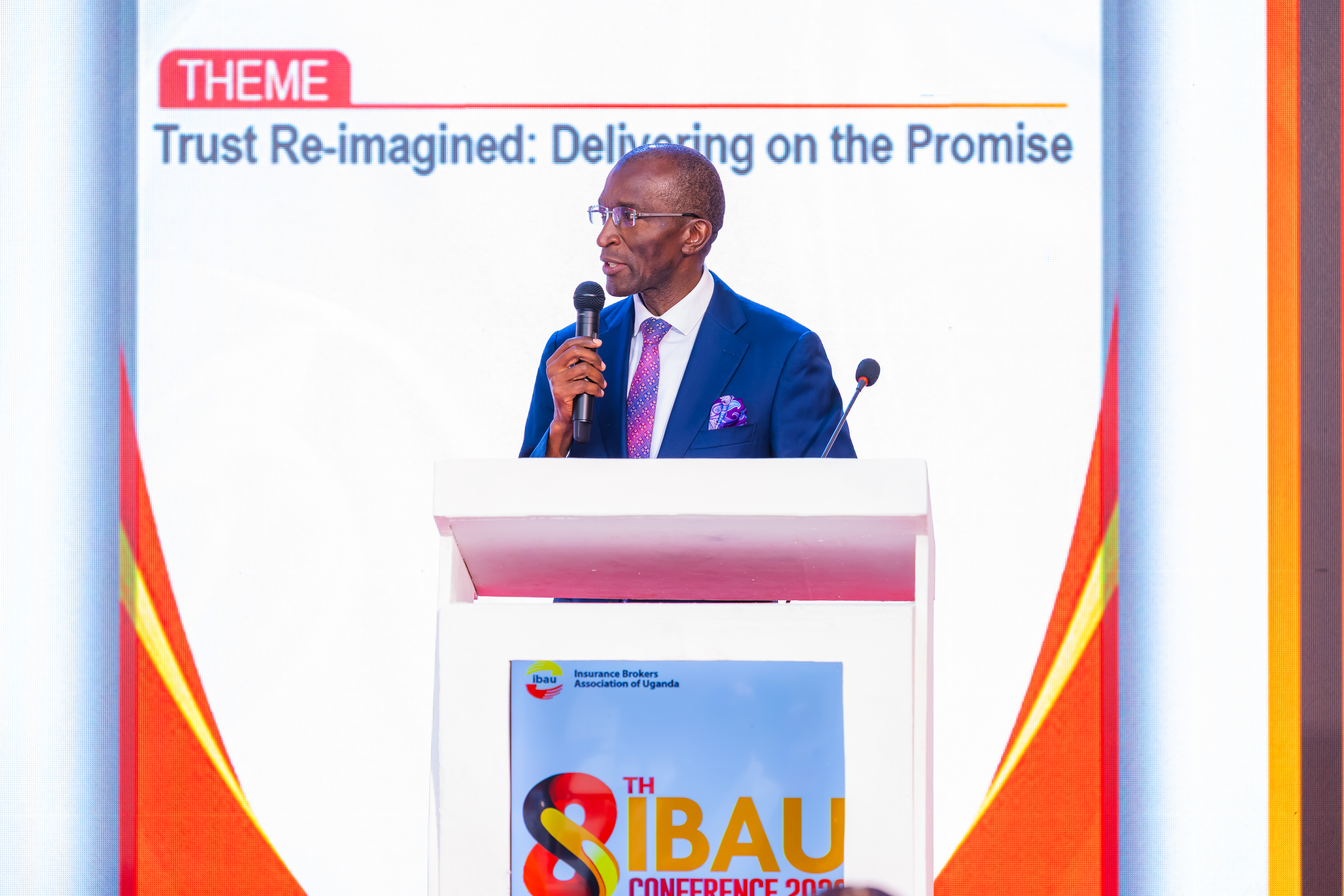
KEY PROCEEDINGS
A. Conference Convener’s Opening: Purpose and Gratitude – Mr. Edward Nambafu
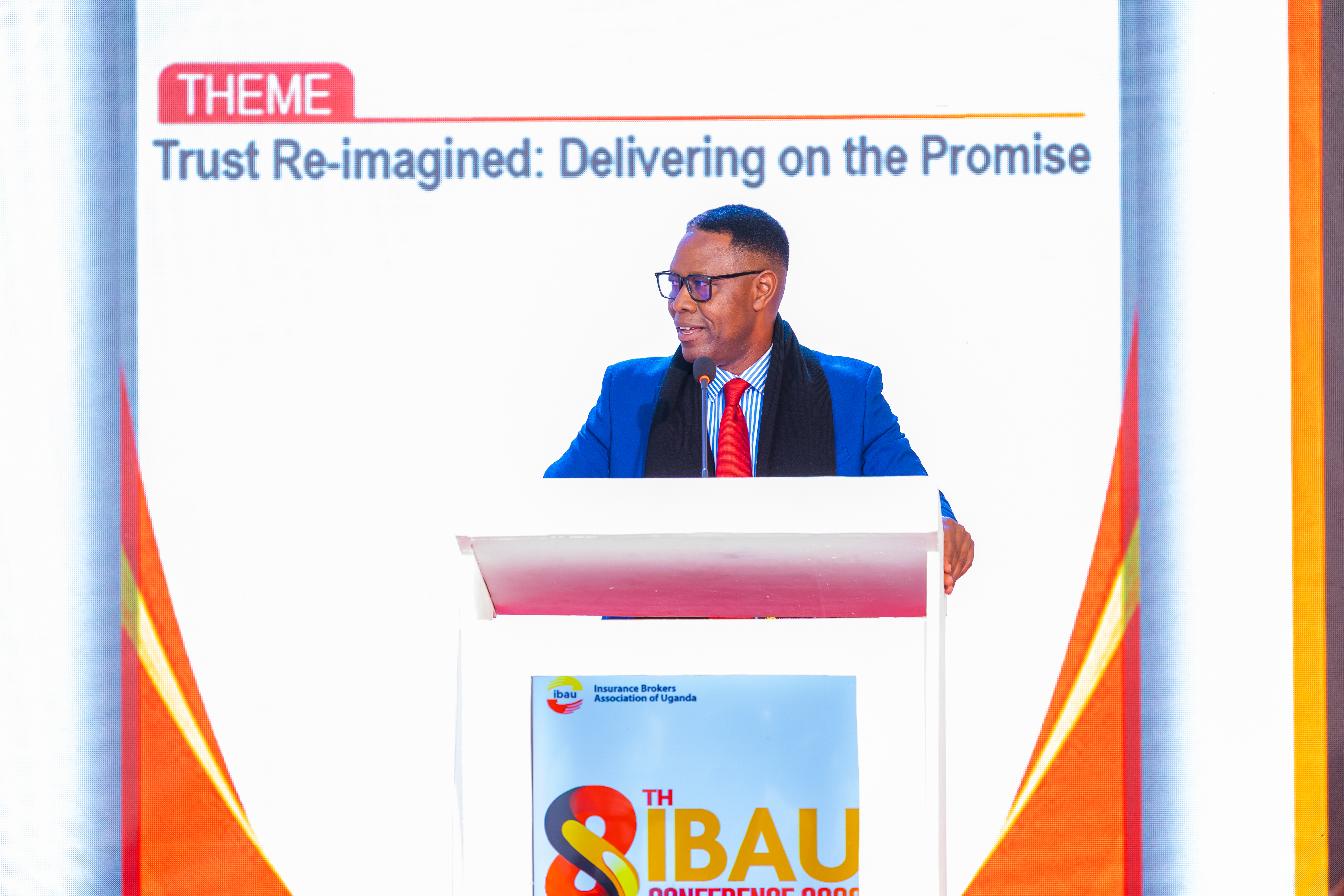 The Conference Convener opened with a tone of deliberate planning and gratitude. Every decision regarding the conference was purposeful. He thanked the IBAU leadership and the Outbound Board for their guidance and trust in the organizing committee. Special appreciation was extended to Mirai, the Platinum Sponsor, noting that “Mirai” is a Japanese word meaning “the future “a deliberate symbolic alignment with the industry’s forward-looking transformation. This partnership was described as a shared journey toward shaping the future of insurance in Uganda. The Convener assured delegates that all logistics, from sessions to delegate support, were in place, noting a full house and an engaging program through Friday. Finally, he thanked the keynote speaker that despite a demanding schedule, he accepted the invitation without hesitation a gesture the Convener described as deeply honoring to the profession.
B. Chairman IBAU Remarks - Mr. Paul Muhame
 Mr. Muhame framed the conference as a response to three enduring industry problems: low product awareness, delays in claims turnaround times, and persistent trust gaps, especially among retail and MSME clients. He argued that reimagining trust requires deliberate, sustained action, not just discussion. He called on brokers to evolve from transactional intermediaries into trusted, strategic advisors who ensure the promise of insurance is consistently delivered. This includes adopting plain-language communication, documenting claims handling timelines, and proactively managing client expectations from sale to settlement. He reminded delegates that the broker’s legal and ethical duty is to act on behalf of the client, not the insurer.
C. President EAIBA Remarks: Mr. John Lagat
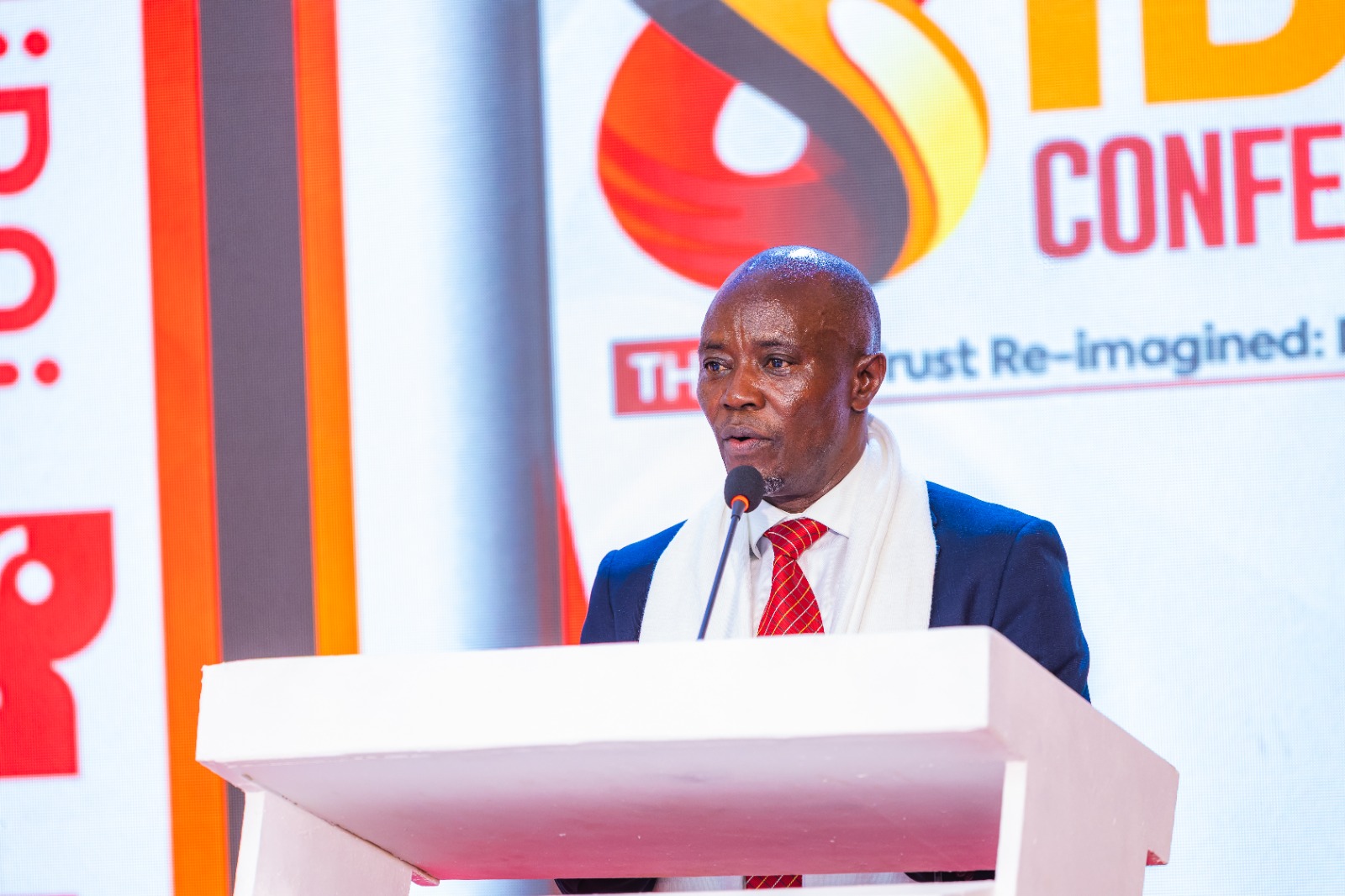 Mr. John Lagat, President of the East African Insurance Brokers Association (EAIBA), traced the association’s founding to the recognition that risks no longer respect national borders. As trade and mobility expanded across East Africa, brokers needed a common platform to collaborate, exchange expertise, and harmonize professional standards. EAIBA now brings together national broker associations from Kenya, Uganda, Tanzania, Rwanda, and Burundi. The President elaborated on three core objectives: strengthening professionalism through enhanced ethical practice and governance; promoting regional collaboration as a sustained platform for cross-border partnerships; and building leadership and capacity through annual conferences and knowledge exchange. He described EAIBA as a symbol of professional unity in East Africa, urging delegates to uphold trust, embrace innovation, and position insurance brokers as indispensable partners in economic growth across the region. He concluded by congratulating IBAU for hosting the 8th conference.
D. Regulatory Fruition: Guest of Honor Address (IRA CEO) - Alhaji Dr. Ibrahim Lubega Kaddunabbi
The IRA CEO opened with a personal reflection, noting his involvement in founding an early insurance venture in 1992 and later establishing one of the first brokerage firms in Rwanda in 1995 lived experience that lent authority to his message. He then presented concrete sector performance data: by the end of Q4 2025, premiums underwritten through brokerage firms stood at UGX 567.58 billion, up from UGX 545.6 billion in 2024, representing modest growth of 4.02%. Brokers account for 28.03% of total industry premiums. Reinsurance broker premiums amounted to UGX 63.74 billion. On claims, of approximately UGX 2 trillion in total premiums underwritten, nearly UGX 950 billion was paid out a claim’s ratio close to 50%, which he described as a significant improvement compared to earlier years.
He then introduced a crucial distinction: transactional insurance (simply selling policies) versus transformational insurance (working for the ordinary Ugandan, rebuilding trust through reliable protection). He noted that brokers, by definition, act on behalf of the client not the insurer placing a unique responsibility on them to provide independent advice. Comparing Uganda to more mature African markets (South Africa, Kenya) where brokers command over 50% of premiums, he argued that a strong brokerage sector is associated with higher penetration and stronger customer trust.
The Regulator laid out four strategic priorities in detail:
Inclusion by design: Products must be deliberately tailored to MSMEs, informal sector workers, households, and agriculture (crop farmers, livestock farmers, and the broader agricultural value chain). Financial protection must extend to those in markets, small businesses, and everyday economic activity.
Simplification of insurance: Complexity alienates clients. Policies must be written in plain, simple language that any ordinary Ugandan can understand. He gave practical examples: an SME importing goods through Malaba may not understand marine insurance; a broker explains and negotiates. A school in Mbarara seeking liability or property insurance risks being underinsured without proper guidance.
Technology and innovation: Digital platforms, embedded insurance, and mobile distribution channels are no longer optional they are essential for lowering costs, extending reach, and improving customer experience. He acknowledged existing initiatives like innovation awards and Insurance Week but called for further action.
Professionalism and ethics: Strengthening professional standards remains core, with key institutions such as the Insurance Training College playing a vital role. Brokers were reminded that they are trusted advisors, transparent intermediaries, and champions of their clients' interests. He delivered a memorable line: trust is not built through marketing it is earned through consistent conduct.
He pledged the IRA’s commitment to an enabling regulatory environment that supports innovation while safeguarding policyholder interests. In closing, he challenged all stakeholders to move beyond over-reliance on corporate business, step out of comfort zones, design products for the underserved majority, and deliver consistently on promises.
E. Trust Reimagined: Delivering on the Promise: Keynote Address (Deputy Governor, BOU)- Prof. Augustus Nuwagaba.
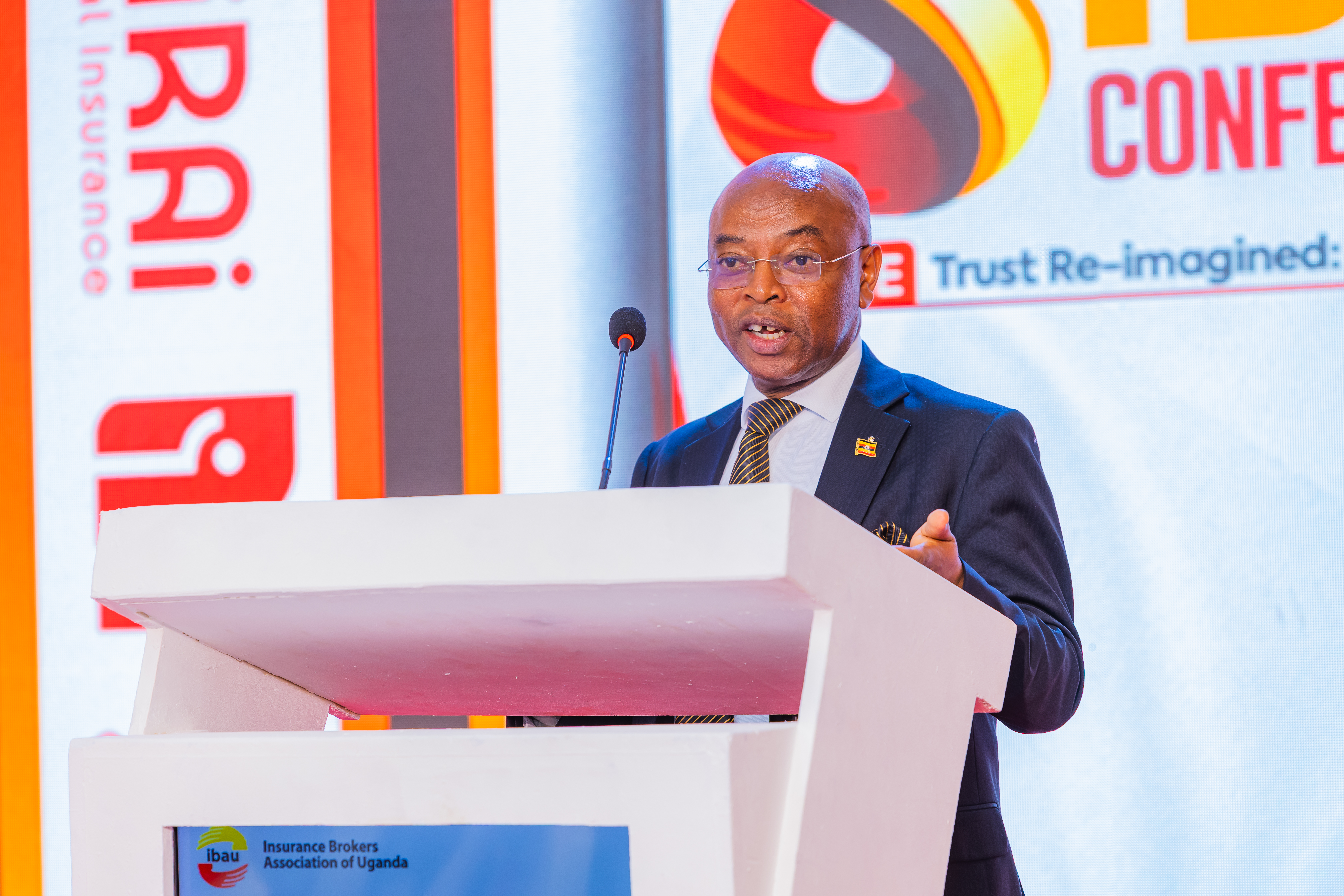 Prof. Nuwagaba opened by framing insurance fundamentally as community pooling risks so that no individual stands alone in times of uncertainty. He situated the discussion within East African integration, invoking the economic principle of “second best”: if an ideal condition cannot be achieved individually, collaboration achieves the next best outcome collectively. He noted progress from the Customs Union to the Common Market and now advancing toward a Monetary Union.
He outlined the three pillars of central bank mandates: price stability (inflation at approximately 2.9% in Uganda), financial system stability (a resilient financial sector), and socio-economic transformation (stability must translate into improved livelihoods). The economy is estimated at USD 69 billion with a resilient currency.
Prof. Nuwagaba delivered a key assertion: macroeconomic stability cannot exist in an environment of unmanaged risk. An economy cannot be truly stable if businesses operate under constant uncertainty about whether shocks will wipe out their investments. He noted encouraging growth in insurance penetration from approximately 0.85% to around 2.0% of GDP, but stressed this is still insufficient. He provided regional comparisons: Kenya at 2.4% (regional leader), Tanzania at about 2.1%, and Uganda at 2.0%. Penetration, he emphasized, is not just a statistic it reflects how deeply insurance is embedded in economies.
Diagnosing the trust problem, he drew on the Central Bank’s own experience of holding town hall meetings to explain financial concepts. Financial inclusion requires that people understand and feel part of the system. Applied to insurance, this means product innovation must reflect people’s real cash flows. He gave a concrete example: a motor insurance policy costing UGX 15 million annually is unaffordable as a lump sum for many, but spread over 12 months becomes about UGX 1.25 million per month suddenly manageable. He asked pointedly why the industry insists on lump-sum payments when installments are possible.
He then turned to the most critical issue: claims settlement. Referencing Uganda Insurers Association research he had worked on, he noted persistent delays and dissatisfaction, describing this as the single biggest “axe to grind” between the public and the insurance industry. His statement was unequivocal: trust is built when people see that promises are honored especially in moments of need. If claims are delayed, disputed, or denied unfairly, trust erodes, and no amount of macroeconomic stability can compensate.
Prof. Nuwagaba described brokers as the critical link between policy frameworks and real people. He introduced a powerful stewardship concept: premiums collected from clients are not personal income; they are funds held in trust. Insurers and brokers are stewards of the public’s money, requiring high levels of accountability, integrity, and discipline. He suggested, where possible, reasonable grace periods or pragmatic administrative flexibility, especially where policy renewal cycles and financial constraints affect clients not breaking rules, but offering human-centered service within regulatory limits.
He emphasized empathy putting yourself in the shoes of a client making a claim. He challenged professionals to ask: If I were the one making this claim, how would I want to be treated? He then broadened the discussion to mindset, urging Africans to recognize that transformation begins with self-preparation, self-discipline, and self-responsibility. He cautioned against a dependency mindset waiting for outsiders while remaining passive.
Drawing on a Keynesian perspective, he noted that markets are important but cannot solve everything. In areas where people cannot afford essential services (education, healthcare), state intervention becomes necessary. The goal is to design systems where both market forces and government work together for inclusive and sustainable growth.
Quoting Galatians 6:9 “Let us not grow weary in doing good, for at the proper time we will reap a harvest” he applied this to insurance: every fair claim settled, every honest policy explained, every client treated with integrity builds a reputation that no public relations spending can buy. In his closing statement he said that: your best PR is your conduct. When you serve people well, they will speak for you in their homes, communities, and networks. That is how trust grows, how the industry expands, and how a resilient financial system is built.
F. Humanizing the Promise: Bugingo Konde (MUA Rwanda)
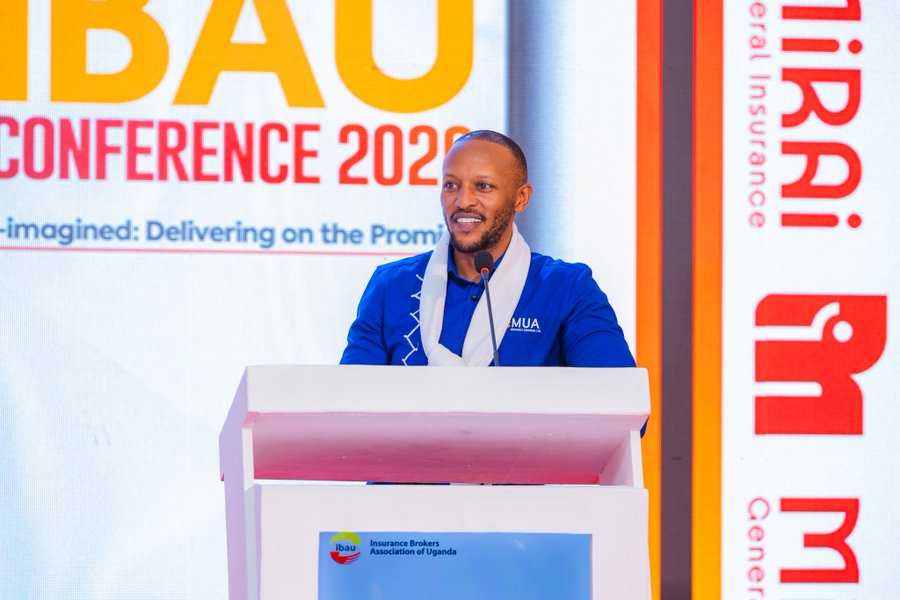 Drawing on his experience transforming MUA from seventh-ranked insurer to market leader in Rwanda, Mr. Konde argued that transformation requires rethinking institutional roles. He shared a practical distribution shift: at MUA, broker-driven business increased from 30% to 50% over four years, while direct business fell from 50% to 15%. He proposed a four-pillar ecosystem model: regulatory enablement (differentiated rules for retail insurance allowing monthly premiums), product innovation through microinsurance (co-created by brokers and insurers), technology as a shared platform (interoperable solutions, not siloed systems), and strengthened distribution partnerships (brokers as co-creators, not just channels). He concluded that the industry must stop treating insurance as a standalone institution and instead build an ecosystem where regulators enable, insurers underwrite, brokers interpret customer needs, and technology partners scale delivery.
G. System Thinking, Incentives, and the Future of Trust: Mr. Ambrose Kibuuka (CEO, ICEA LION General Insurance)
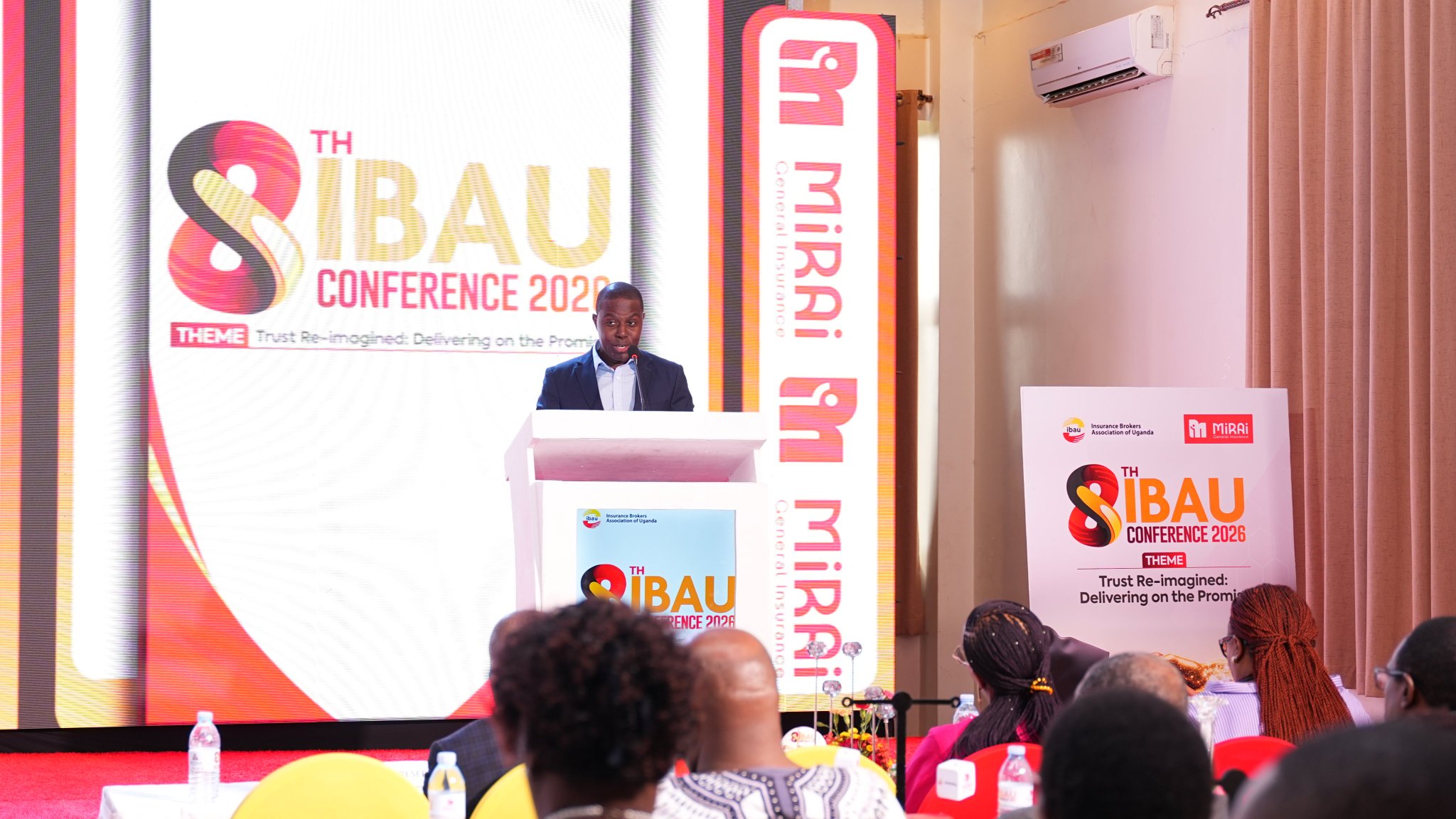 In his system‑level critique, Mr. Kibuuka argued that trust is built not by slogans but by consistently kept promises, and warned that the industry is drifting from genuine risk carriage toward investment‑driven models, thinning underwriting discipline. Diagnosing a zero‑sum mindset where each player optimizes individually, he called for system thinking: every decision must be evaluated by whether it strengthens or weakens the entire insurance ecosystem. He exposed the liquidity trap with a stark example of a UGX 1 million premium, 30% goes to acquisition costs, 40% to operating expenses, leaving only 30% for claims and reserves calling this a breach of the implicit contract with policyholders. Data, he insisted, is valuable only when it changes a decision, urging a shift from reactive claims payment to preventive success measured by a Prevented Loss Ratio. He rejected the extreme of “paying everything” as undermining insurability, instead calling for clear, plain‑language communication of contract terms. while providing a reality check that Uganda’s premium base is under USD 500 million remains small, requiring inclusive and disciplined growth. Drawing on regional failures in Kenya, he pushed for collaboration over insularity insurers as intelligent partners with telcos, fintechs, and health providers and closed by stating that markets fail not because of risk but because of poor incentives, with the defining line: “Trust is not what we say it is what we consistently do.”
H. The Connected Carrier; Data Collaboration and Synergies: Mr. Geoffrey W. Sajjabi (Chief Commercial Officer, NSSF Uganda)
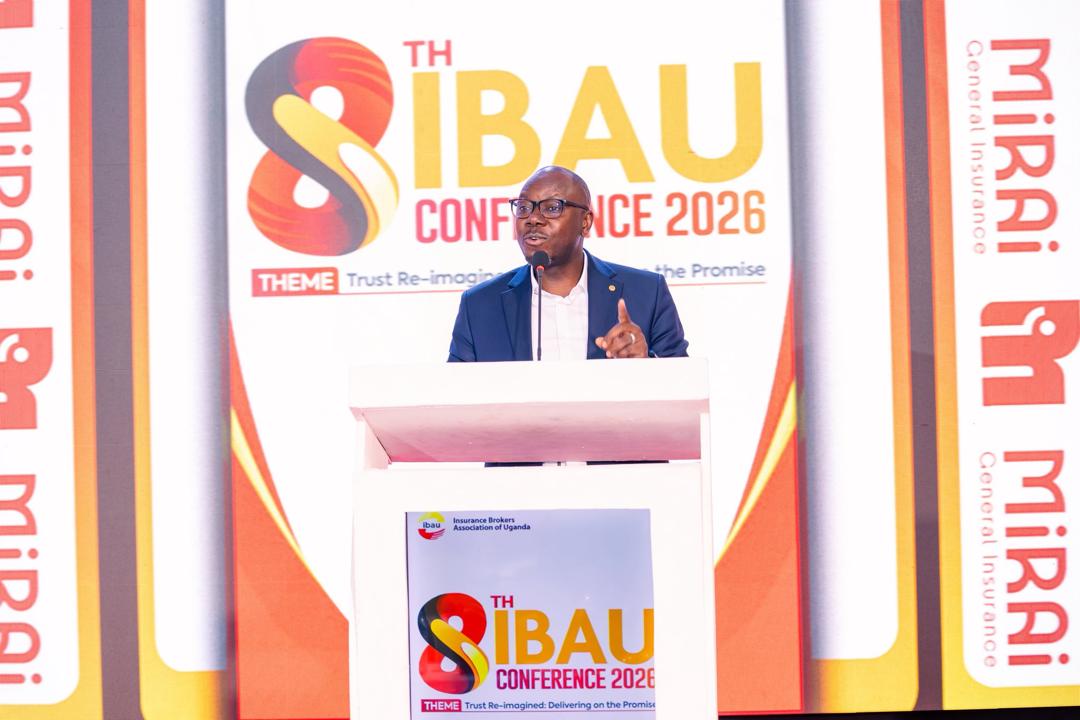 Mr. Sajjabi opened with a village story from Mayuge about a simple burial fund that operates on contributions, recorded membership, and automatic coverage, concluding that Africans already understand insurance; the problem is not comprehension but design, as formal insurance has failed to adapt to how people actually live and pool resources. He argued that scale is achieved only through collaboration, which solves information asymmetry, operational inefficiency, and the trust deficit. Using NSSF’s three million members as a blueprint, he challenged insurers to partner with institutions that already aggregate people and hold data, rather than chasing individuals one by one, moving from selling policies to solving problems. He identified massive underserved risks: 98% of active NSSF contributors have no medical cover, and post-retirement health risk, unemployment risk, and informal sector vulnerability remain largely ignored. His deep insight was that many customers are asset-rich but cash-poor, needing not savings replacement but liquidity when life disrupts income, calling for annuity-based and income guarantee products that convert lump sums into predictable monthly payments, noting that even modest guaranteed income, e.g., the government’s SAGE programme of 25,000 shillings per month, attracts high demand because of predictability. He closed by stating that the industry’s real task is not to introduce insurance to Africans it already exists informally but to formalize, scale, and strengthen what already works, with the challenge that if insurers move from selling policies to solving problems and from silos to collaboration, they will transform the market rather than struggle to grow.
I: Fire Side Chat: Panel 1
 Moderated by Mrs. Ritah Mutesi Kabayiza (Executive Director, WTW), the panel comprised Mr. Joseph Nsubuga (CEO, Mirai Insurance), Ms. Elinipa Elias (President, TIBA), prof. Augustus Nuwagaba (Dy. BOU), and Mr. Musa Sebuufu (Manager, Risk and Actuarial, IRA). The discussion explored trust as the core issue, noting that the public defines the industry not by technical competence but by the answer to one question: “Will I actually be paid when I claim?” The panel identified mis-selling as the true failure point, where damage to trust is done long before a claim is filed. Mr. Sebuufu confirmed a regulatory shift from solvency supervision to conduct of business, with claims payment behavior now a key risk indicator. Mr. Nsubuga acknowledged the tension between sales KPIs and long-term trust, calling for incentive redesign that rewards promise fidelity. Ms. Elias reinforced the broker’s role as a fiduciary and primary safeguard against trust failure. The panel concluded that sustainable growth requires alignment of three actors: brokers as client advocates, insurers as promise keepers, and regulators as guardians of fairness.
I: Fire Side Chat: Panel 2
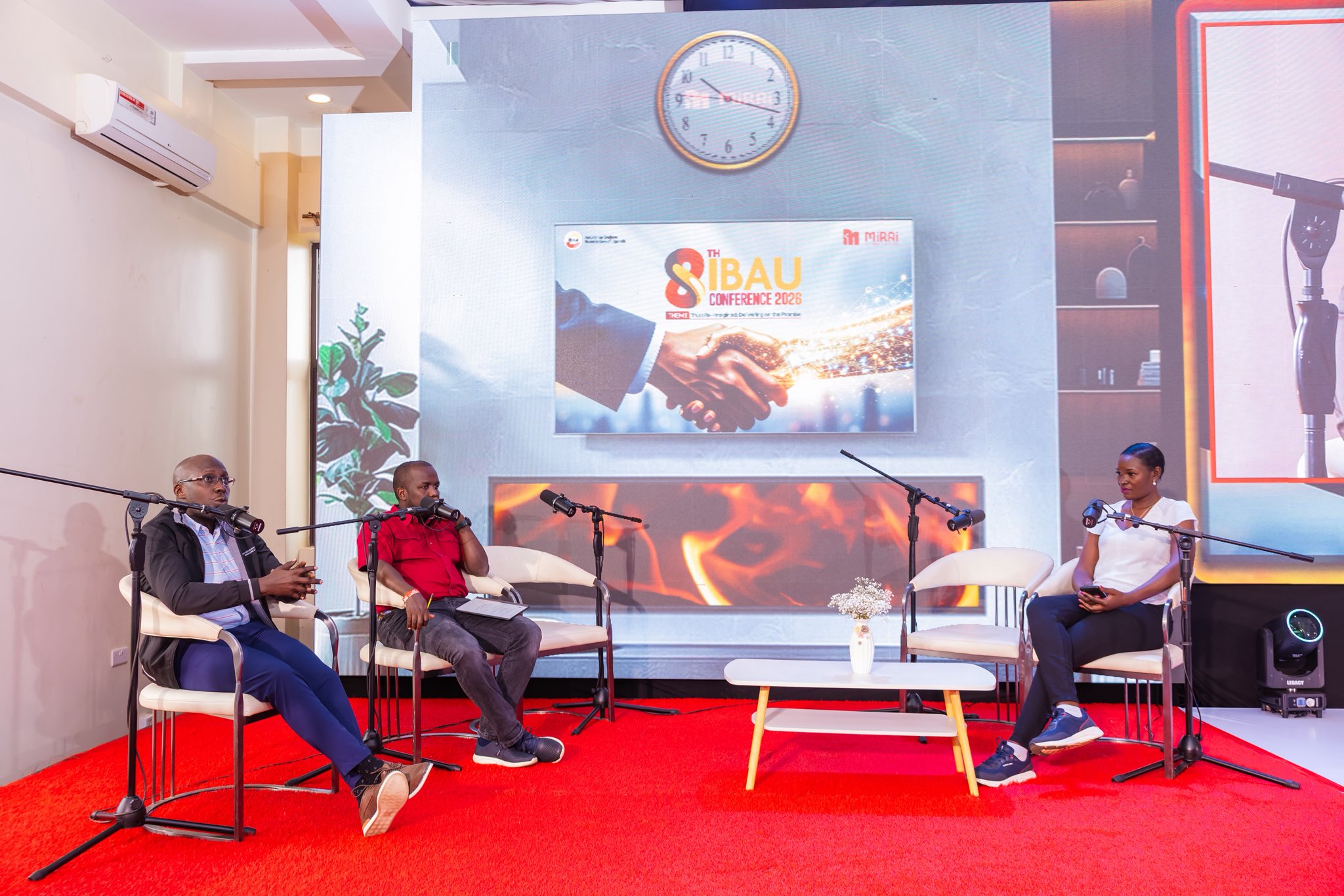 This fireside chat, moderated by Ms. Isabella Akareut (aYo Uganda) with panelists Mr. Emmanuel Mwaka (ICEA Life) and Mr. Ronald Batanda (SkyRe), argued that simplifying insurance requires not easier words but cognitive alignment translating concepts like “premium” into “community contribution” to re-anchor insurance in indigenous logic. The panel introduced forward-looking metrics such as Prevented Loss Ratio, Client Risk Improvement Score, and Engagement Frequency Index to measure prevention rather than just claims paid. They criticized claims processes designed for defensibility rather than service, calling for contextual intelligence over checklist compliance. They exposed a fundamental problem: policies are built on distrust of customers what they described as “lawyer-driven gap closing” which must shift from a risk-transfer mindset to a risk-partnership mindset. Reinsurance brokers can add value through claims advocacy, product co-creation, data intelligence, and innovation capacity. Practical next steps start with one painful problem pricing unfairness, claims inefficiency, or customer blindness followed by clean data, simple analytics, and only then AI, not AI strategy decks. The biggest failure is category-based segmentation, which forces good clients to subsidize bad ones, as illustrated by a 3000% premium hike after one claim. Distribution must match context: language, identity, and platform you should “love people how they want,” moving from “visit our office” to mobile, agent-assisted, and embedded models. The closing insight: “Insurance does not lack data; it lacks the discipline to use data in a way that treats customers as individuals rather than categories.”
I. Fire Side Chat: Panel 3
 Moderated by Mr. Ernest Magezi Barusya (CEO, Kenbright) with panelists Mr. Geoffrey W. Sajjabi (NSSF Uganda), Ms. Linda Rwatangabo (Cornstone Asset Mgt), and Mr. David Muwanguzi (Prudential Assurance), The panel argued that insurance should sit between the shock and the savings: a well‑designed health or disability product pays the shock directly, preserving retirement savings and complementing social security. Growth, they noted, will come not from traditional distribution but from embedded insurance ecosystems products integrated into savings platforms, unit trusts, mobile money, and digital onboarding using national ID and automated compliance. Segmentation is critical: life‑event, lifestyle, and health protection must match customer context rather than generic mass products. However, the industry lacks granular data on retail insurance contribution and segment‑level trends, making strategic growth impossible without connecting existing data centers across pension funds, insurers, identity systems, and telcos. The moderator closed with the memorable line: “The future of insurance is not sold it is embedded.”
I. Fire Side Chat: Panel 4
Moderated by Solomon Rubondo, the panel featuring Ruth Namuli, Saul Seremba, and Ambrose Dabani exposed a central paradox in insurance claims: insurers often receive notification of a loss, yet still require the customer to formally report the same event. This “bureaucratic déjà vu” reflects systems designed primarily for liability protection, fraud control, and legal defensibility rather than customer responsiveness. Even when critical information already exists within the insurer’s ecosystem through employer records, hospital notifications, or national registries workflows continue to demand re-certification. The result is delay without added value, which customers interpret simply as: “They know, but they are not acting.” The panel emphasized that this failure is not due to irrational individuals, but to fragmented internal architectures that prevent coherent action. In response, they proposed a shift from application-based claims to event-triggered claims where verified life events automatically initiate the claims process. Under this model, claims become a matter of confirmation rather than discovery. This transition requires a fundamental rethinking of trust: moving from a documentation-heavy model to one grounded in verified data. The core tension, therefore, lies between control introducing friction to prevent leakage and responsiveness delivering timely, coherent customer experience. Ultimately, the panel argued that winning institutions will be those that act consistently on what they already know. Trust is not built through promises such as “we pay claims,” but through operational alignment systems behaving in ways that reflect their own knowledge. The industry must dismantle ritualistic requirements and replace them with intelligent, event-driven workflows, ensuring that at the moment of loss, the customer feels accompanied, not interrogated.
I. Cross-Cutting Themes and Synthesis
Across all speeches, panel discussions, and interventions, six themes recurred consistently, forming a coherent synthesis of the conference’s message.
Trust is operational, not oratorical. Trust in insurance is built through consistently kept promises rather than slogans or messaging. The industry risks drifting from genuine risk carriage toward investment-driven models, which can weaken underwriting discipline. Trust is therefore defined not by what is said, but by what is consistently done. Even informal community systems such as village burial funds succeed because of simple mechanisms contributions, recorded membership, and automatic coverage that are trusted because they are reliably practiced. Formal insurance systems often fail when they do not adapt to how people actually organize risk and pool resources in everyday life.
Inclusivity is an economic necessity, but requires systems thinking. The traditional corporate-heavy insurance model has reached its limits. A zero-sum mindset, where each player optimizes individually, undermines sector-wide growth. Instead, system thinking is required, where every decision is evaluated based on whether it strengthens or weakens the entire insurance ecosystem. Scale is achievable through collaboration, leveraging existing large pools such as pension schemes and other institutional networks to reach underserved groups, including MSMEs and informal sector workers.
Claims settlement is the ultimate test and reflects a liquidity challenge. Delays in claims remain the most critical point of dissatisfaction. Structurally, there is often a liquidity imbalance in the insurance value chain: a significant portion of premiums is consumed by acquisition costs and operational expenses, leaving a limited share for claims and reserves, which can strain the implicit contract with policyholders. In addition, claims processes are often designed for defensibility rather than service delivery, highlighting the need for contextual intelligence rather than rigid checklist compliance.
Regional collaboration and data partnerships are no longer optional. Harmonization of standards across the region is essential for sector growth. Effective expansion into underserved segments requires collaboration with institutions that already aggregate populations and hold relevant data, rather than attempting to reach individuals in isolation. Significant protection gaps remain, particularly in health cover and post-retirement risks among large segments of formal and informal sector workers, underscoring the need for integrated, data-driven partnerships.
Professionalism and ethics drive market share, but incentives must be redesigned. While intermediary participation in the market has room to grow, there is a fundamental tension between growth-oriented sales incentives and compliance-oriented customer protection. Market inefficiencies often arise not from risk itself but from poorly aligned incentive structures. A shift is needed from a reactive claims-payment model to a preventive success model, supported by forward-looking performance metrics such as prevented loss outcomes, client risk improvement, and engagement frequency.
Mindset, cognitive alignment, and cultural change are foundational. Sustainable transformation of the insurance sector requires more than technical reform; it requires cognitive alignment with how people understand value and risk. Insurance concepts such as premiums must be reframed in familiar terms that align with indigenous systems of mutual support. The sector must shift from a risk transfer mindset to a risk partnership approach. Ultimately, the key barrier is not lack of understanding among clients, but the design of insurance products and systems that do not reflect lived realities.
I. Key Data Points Summary (Narrative)
The conference was grounded in concrete figures, which were referenced repeatedly across sessions.
The Regulator reported that broker premiums reached UGX 567.58 billion in 2025, a 4.02% increase from UGX 545.6 billion in 2024. Brokers now account for 28.03% of total industry premiums. Reinsurance broker premiums stood at UGX 63.74 billion. Industry claims paid approached UGX 950 billion, representing roughly 50% of total premiums a significant improvement over earlier years. Uganda currently has 50 licensed insurance brokers operating within a broader ecosystem of approximately 40 licensed insurance and reinsurance players. By comparison, in mature African markets such as South Africa and Kenya, brokers command over 50% of premiums in key segments, demonstrating that a strong brokerage sector is associated with higher insurance penetration and stronger customer trust.
The keynote speaker added macroeconomic and penetration data: Uganda’s insurance penetration is approximately 0.86% of GDP, compared to Kenya’s 2.4% and Tanzania’s 2.1%. Uganda’s economy is estimated at USD 69 billion, with inflation at 2.9% and a resilient currency. He noted that penetration had improved from around 0.85% but remains insufficient.
Taken together, these data points tell a story of progress in terms of growing premiums, improved claims ratios, and rising penetration, but this is still insufficient relative to regional peers and the needs of the underserved majority.
J. Divergent Views
While the push for digital transformation and microinsurance was widely endorsed, participants voiced critical cautionary perspectives. Some argued that installment premium models, while essential for inclusion, carry higher administrative and default risks that could destabilize smaller insurers if not carefully managed. Others questioned whether Uganda’s current regulatory sandbox framework is sufficiently agile to test and scale innovative products like pay-as-you-drive or crop index insurance without lengthy approval delays. A third concern centered on capacity: while brokers are being asked to act as strategic advisors and co-creators, many lack the data analytics, digital literacy, and product design skills required. Without large-scale upskilling, the shift from transactional to transformational insurance risks remaining aspirational. Finally, some delegates warned that focusing heavily on microinsurance could inadvertently divert resources from improving claims settlement for existing policyholders, where trust is already most fragile.
K. Actionable Recommendations.
The following recommendations synthesize the closing calls from the IRA CEO, the Deputy Governor, the IBAU Chairman, the EAIBA President, Mr. Konde, Mr. Sajjabi, Mr. Kibuuka and the panel.
For IBAU Leadership:
- Develop and enforce a broker code of conduct emphasizing transparency, claims handling timelines, and client communication standards.
- Advocate with IRA and Bank of Uganda for regulatory flexibility to allow installment premium payments without penalty.
- Create a working group on MSME and agricultural insurance products, involving underwriters and fintech partners.
- Launch a public awareness campaign demystifying insurance using plain language and local media.
For the Insurance Regulatory Authority (IRA):
- Publish quarterly claims settlement dashboards by insurer and broker to drive accountability.
- Establish a regulatory sandbox for testing inclusive products such as pay-as-you-drive or crop index insurance.
- Mandate plain-language policy summaries for all retail and MSME products.
- Reinforce continuing professional education requirements for broker licensing.
- Create a differentiated regulatory framework for retail insurance that explicitly allows monthly premium installments and integration with bank-led premium financing.
- Consider expense ratio guidelines to prevent the 70% cost‑to‑premium trap.
For the Bank of Uganda:
- Include insurance awareness in town hall financial literacy programs currently focused on banking and payments.
- Explore incentives (such as tax or regulatory adjustments) for insurers that achieve high claims settlement ratios and low complaint volumes.
For Insurance Underwriters:
- Collaborate actively with brokers encourage clients to use brokerage services rather than bypassing them.
- Invest in claims staff training on empathy, transparency, and speed.
- Design microinsurance and installment‑based products, but also annuity‑based and income‑guarantee products for asset‑rich, cash‑poor customers
- Adopt forward‑looking metrics: Prevented Loss Ratio, Client Risk Improvement Score, Engagement Frequency Index
For Individual Brokers and Practitioners:
- Commit to ongoing professional development via the Insurance Training College and industry courses.
- Adopt a plain-language policy explanation checklist for every client.
- Document claims handling timelines and proactively communicate with clients at each stage.
- Embrace digital tools, but also practice contextual intelligence aligning distribution with local language, identity, and platform.
For Technology Partners and Insurtech:
- Focus on building scalable, interoperable solutions that serve multiple insurers, brokers, and aggregators rather than proprietary, siloed systems.
For Regional Bodies (EAIBA and national associations):
- Harmonize broker qualification standards and continuing education requirements across East Africa to facilitate cross-border practice and mutual recognition.
L. Closing Observations and Conference Sentiment
The 8th IBAU Annual Conference ended on a note of cautious optimism tempered by structural realism. The industry has demonstrable growth: 4% broker premium increase, claims ratio approaching 50%, and penetration up from 0.85% to 2.0% of GDP. However, speakers refused to declare victory.
New insights that shaped the closing sentiment:
The liquidity trap resonated deeply: If a large share of every premium is absorbed by acquisition and operating costs, the system is structurally constrained from the outset. This raised a critical concern among delegates: how can the industry rebalance its expense structure to ensure sustainability and better value retention for claims and reserves?
The institutional aggregation blueprint shifted the conversation: The focus moved from “how to reach the underserved” to “who already has access to large populations and relevant data.” This reframing emphasized a more practical, partnership-driven pathway to inclusion, leveraging existing institutional networks rather than building parallel systems.
Cognitive alignment reframed the communication challenge: The issue is not merely simplifying language, but ensuring conceptual alignment with indigenous logic and lived experience. For example, reframing “premium” as “community contribution” helps anchor insurance in familiar social and cultural systems of risk-sharing.
Prevented Loss Ratio and related metrics introduced a paradigm shift in measurement: Success in insurance should not be defined only by claims paid, but also by risks prevented and losses avoided. This expanded the performance lens toward proactive value creation rather than reactive compensation.
The most repeated question throughout the discussions was no longer simply “What more can be done?” but rather “What are we measuring, and are we measuring the right things?”
A key philosophical anchor emphasized that without trust there is no insurance, and without insurance there is no sustainable economic growth. This was reinforced by the reminder that trust is not defined by rhetoric but by consistent behavior over time. It was further stressed that shifting from selling policies to solving real problems, and moving from siloed approaches to collaboration, is essential for transforming the market.
The rapporteur concludes that the conference successfully moved beyond diagnosis to prescription, and from prescription toward system redesign. The remaining challenge lies in execution through implementation, collaboration, incentive realignment, and the sustained pursuit of professionalism as a daily operational practice rather than a stated ideal.
M. Final Reflections and Call to Action
The conference closed with a powerful reaffirmation that trust is not a soft virtue but a hard currency. Speakers and delegates alike recognized that the industry has made measurable progress growing broker premiums, an improving claims ratio, and a clear regulatory shift toward conduct supervision. However, the consensus was that this progress is insufficient. Uganda’s insurance penetration at less than 1% of GDP remains below regional peers, and the persistent trust deficit continues to exclude MSMEs, informal workers, and households from essential financial protection.
The call to action is clear: move from transactional to transformational insurance. This requires brokers to act as fiduciaries, not sales agents; insurers to honor promises promptly; regulators to enforce fairness; and technology partners to enable access. It also requires a mindset shift from seeing insurance as a product to be sold, to seeing it as a public good that builds resilience, dignity, and economic empowerment. The opening remarks by the Convener and the regional vision from EAIBA reminded all that this transformation cannot happen in isolation; it requires purposeful partnership and regional unity.
N. Final Message
“Trust is built when promises are honored. Deliver on the promise, every time.”